 216 Reviews

Malfunctioning oxygen sensors in Audi vehicles can cause a range of issues that affect vehicle performance and emissions. Rough idle and hesitation are its primary symptoms. Protech Automotive Services is the trusted auto service shop in Johnston that provides prompt, practical solutions to your Audi sensor issues so that you can enjoy your drive without worry or interruption.
How the Oxygen Sensor Malfunction Causes Rough Idle and Hesitation
The oxygen sensor is a critical component of Audi’s emission control system, which continuously monitors exhaust gases to ensure optimal combustion and minimize harmful emissions. Modern Audi cars feature multiple oxygen sensors throughout the exhaust system, generally before and after the catalytic converter.
The upstream sensor measures the oxygen content entering the engine, and the downstream sensor measures the oxygen content in the exhaust gases. This information is sent to the engine control unit (ECU), which maintains effective and efficient combustion. That’s why the oxygen sensor has a critical contribution in maintaining the vehicle’s fuel efficiency, emission control, engine performance, and catalytic converter functionality.
When the oxygen sensor malfunctions, the ECU fails to receive critical data for proper combustion, resulting in improper air-fuel mixture regulation and faulty combustion. This imbalances the engine’s steady, sufficient power output, causing hesitation and a rough idle in the Audi.
The engine fails to deliver steady power, resulting in vibration, sudden jerks, and an uneven, lumpy feel at idle. This condition is known as rough idle. Also, when you accelerate the vehicle, the engine hesitates and stumbles before responding to the driver’s input.
In addition, the vehicle experiences poor fuel economy, reduced performance, and increased emissions due to an oxygen sensor malfunction. The check engine light illuminates on the dashboard as the issue progresses.
Factors Causing Oxygen Sensor Damage
Here are some factors and underlying causes of oxygen sensor malfunction in Audi vehicles.
- Contamination of vehicle fluids into the air fuel mixture, due to oil leaks, coolant leaks, and excessive use of fuel additives, contaminates the sensor’s sensitive element. This hinders the sensor’s ability to function accurately.
- Road debris, impacts, or improper handling during installation can physically damage the sensor, potentially causing a malfunction in the future.
- O2 sensors also degrade naturally over time due to constant exposure to high temperatures and corrosive exhaust gases.
- Fuel system issues, such as damage to fuel injectors, the fuel pressure regulator, or other components, can cause an oxygen-rich or lean fuel mixture. Over time, this damages the O2 sensor.
- Leaks in the exhaust system can introduce outside air and disrupt the isolated environment required for accurate O2 sensor readings, resulting in inaccurate data. This causes hesitation and a rough idle over time.
- The sensor material gets damaged when it comes into contact with silicon. Note that using sealants and lubricants containing silicon can damage O2 sensors over time.
Addressing Oxygen Sensor Malfunctions in Audi Cars in Johnston
Addressing O2 sensor issues requires replacing the damaged sensor with a new one. However, the first step is to diagnose the problem, identify the location, and determine the underlying cause of the malfunction.
The first step is a diagnostic scan, where our technicians connect the vehicle to an Audi-specific scanner that retrieves fault codes from the engine control unit and analyzes them to identify the malfunction. Then, a further visual inspection is conducted to determine the extent of the damage and the underlying cause of the oxygen sensor malfunction. To further establish the diagnosis, the sensor is tested in isolation with a multimeter, which measures its input and output voltages.
After confirming the malfunction, technicians removed the damaged sensor, cleaned its housing, and installed a new sensor. It is recommended to replace both upstream and downstream sensors as a pair to ensure accurate oxygen content readings. Furthermore, the underlying cause of the malfunction is addressed to ensure optimal sensor performance. After that, the ECU is reset by clearing the fault codes and recalibrated to operate with the new sensor.
High-Quality Audi Services at Protech Automotive Services in Johnston, Rhode Island
Operating since 2010, Protech Automotive Services has 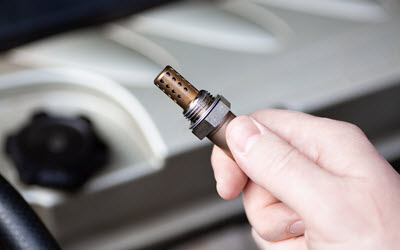 been the trusted go-to for people in Johnston for top-notch Auto service. We service all the domestic, Asian, and European brands. Our ASE-certified technicians ensure your Audi receives the best service at our facility.
Equipped with advanced repair tools, we provide service with a 36,000-mile/36-month warranty. We operate at 1901 Plainfield Pike, Johnston, and serve nearby cities in Rhode Island.