 216 Reviews
Is Your Ride Getting Bouncy Around Johnston? Your Shocks May Be Worn
Shocks and struts do more than smooth out bumps — they keep your tires in contact with the road so the car steers, brakes, and corners the way it should. Protech Automotive Services replaces worn shocks and struts for Johnston, RI drivers on European, import, and domestic vehicles. If your car floats, bounces, or nose-dives when you stop, it’s time for a look.
Shocks and struts are the ride-control heart of your suspension, damping the energy from every bump so your tires stay planted. They wear so gradually that most drivers never notice how loose and floaty the car has become until fresh units go on. Beyond comfort, they directly affect braking, cornering, and how the car behaves in an emergency.
Quick Takeaways
- Worn shocks and struts cause a bouncy ride, nose-diving under braking, and cupped tire wear.
- They typically need replacement around 50,000–75,000 miles, though rough roads shorten that.
- Worn ride control lengthens stopping distance — it’s a safety part, not just comfort.
- Protech replaces shocks and struts in axle pairs and realigns as needed, all under warranty.
- Fresh shocks tighten steering, shorten stopping distances, and steady the car while cornering or towing.
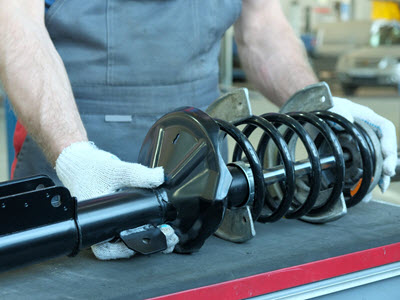
Shocks and Struts Control the Car — Not Just the Comfort
Their job is to keep the tires firmly on the pavement, so worn units let the car bounce, sway, and take longer to stop. That’s why they matter for safety: since roughly 94% of serious crashes involve driver-related factors per NHTSA research, keeping the car responsive to your inputs is squarely in your control. Fresh ride-control parts restore braking stability and predictable handling.
The Warning Signs Are Easy to Feel and See
A ride that bounces repeatedly after a bump, the nose dipping hard under braking, and clunks over rough pavement all point to worn dampers. Check your tires, too — a cupped or scalloped wear pattern is a classic sign of failing shocks. A quick “bounce test” and a road test tell us whether the struts are done, and we separate this from steering and suspension wear during inspection.
How Protech Replaces Shocks and Struts
We replace shocks and struts in pairs across an axle so the car stays balanced side to side. Struts are a structural part of the suspension and affect alignment, so we perform an alignment afterward when needed to protect your new tires. Our ASE-recognized technicians use quality ride-control components matched to your vehicle, whether it’s a firm-riding European sedan or a family SUV, all backed by our nationwide warranty.
Johnston Drivers Trust Protech to Restore the Ride
Rhode Island’s frost-heaved roads and potholes wear shocks out faster than smooth highways would, and we’ve replaced them locally since 2010. We serve Johnston plus Cranston, North Providence, Warwick, and Scituate, with loaner vehicles and a 24-hour key drop to keep the visit easy.
How Fresh Shocks Change the Way Your Car Drives
Drivers are often surprised how much new shocks and struts transform a car. The body stops floating over dips, the steering feels tighter and more planted, and the car settles quickly after bumps instead of wallowing. Ride-control wear happens so gradually that most people don’t realize how loose their car had become.
Fresh dampers also protect your tires and improve safety when it counts. Because worn shocks let the tires skip and lose grip, replacing them shortens stopping distances and steadies the car in emergency maneuvers and while towing — exactly when you need control most.
Schedule Service at Protech Automotive Services
Protech Automotive Services is a family-owned, ASE-recognized shop that has served Johnston, RI since 2010, backing its work with a nationwide TechNet 3-year/36,000-mile warranty. We proudly help drivers from all throughout surrounding areas including:
Loaner vehicles, a 24-hour key drop, and local pickup and drop-off keep you moving while we handle the repair.
Frequently Asked Questions
How do I know if my shocks or struts are bad?
Signs include a bouncy or floaty ride, the front dipping when you brake, clunking over bumps, and uneven, cupped tire wear. A bounce and road test confirm it.
How often should shocks and struts be replaced?
Many vehicles need them around 50,000 to 75,000 miles, but rough roads and heavy loads shorten that. An inspection determines your car’s condition.
Should shocks and struts be replaced in pairs?
Yes. Replacing them in axle pairs keeps handling balanced side to side and gives consistent, predictable braking and cornering.
Do worn shocks affect braking?
Yes. Worn shocks let weight shift and reduce tire contact, which lengthens stopping distance and hurts control — a real safety concern.
Do you replace struts on European vehicles?
Yes. Protech replaces shocks and struts on Audi, BMW, Mercedes, MINI, Porsche, and Volkswagen, plus import and domestic makes, with alignment as needed.